Short answer
Make sure the page returns 200, can be indexed, and is in your sitemap. Give it one unique title and meta description, one H1, and enough text to answer the search. Fix broken links and temporary redirects, turn on compression, and keep the URL short and readable.
Before you start
Run this on the pages that matter first: your homepage, your main product or service pages, and any page that already gets search traffic. Fixing an issue on a page nobody visits changes little.
The groups are in order. A page Google cannot index gains nothing from a better title, so work top to bottom.
Indexing
- The page returns 200. A 4xx or 5xx status means Google sees an error. Check that links on your site do not point to pages that no longer exist.
- It is not blocked from indexing. Look for a
noindexmeta tag or a robots.txt rule that covers the URL. Themes and plugins sometimes add these without asking. - It is in your XML sitemap. The sitemap lists the URLs you want found. Pages missing from it can still be found through links, but more slowly.
- HTTPS works and the certificate is valid. An expired certificate shows a warning to visitors and puts off Google.
Titles and descriptions
- One title tag, specific to the page. Name what the page offers in words a searcher would use. Around 50 to 60 characters usually fits in results without being cut.
- No duplicate titles across pages. Two pages with the same title make it hard for Google to tell which to show.
- A meta description that is present and unique. It does not change rankings directly, but Google often shows it and it affects whether people click.
Headings and content
- One H1 that says what the page is about. It can match the title or be close to it.
- Enough text to answer the search. A page that targets a question should answer it. Thin pages rarely hold a position.
- One page per topic. If two pages chase the same keyword, merge them or give each a distinct angle.
Links and redirects
- No broken internal links. Every link on the page should reach a live page.
- Permanent moves use 301 redirects. A 302 tells Google the move is temporary, so it may keep the old URL indexed.
- The URL is short and readable.
/pricingbeats/index.php?id=482&ref=nav. Avoid changing URLs that already rank.
Speed
- Compression is on. Gzip or Brotli shrinks HTML, CSS, and JavaScript on the way to the browser. Most hosts turn it on with one setting.
- The page loads quickly on a phone. Large images and heavy scripts are the usual cause of a slow page. Compress images and load only the scripts the page needs.
What this list leaves out
Content quality and backlinks matter more than any single row above, and you have to judge both yourself. Structured data, image alt text, and Core Web Vitals are also worth a look once the basics pass.
Run it on every page at once
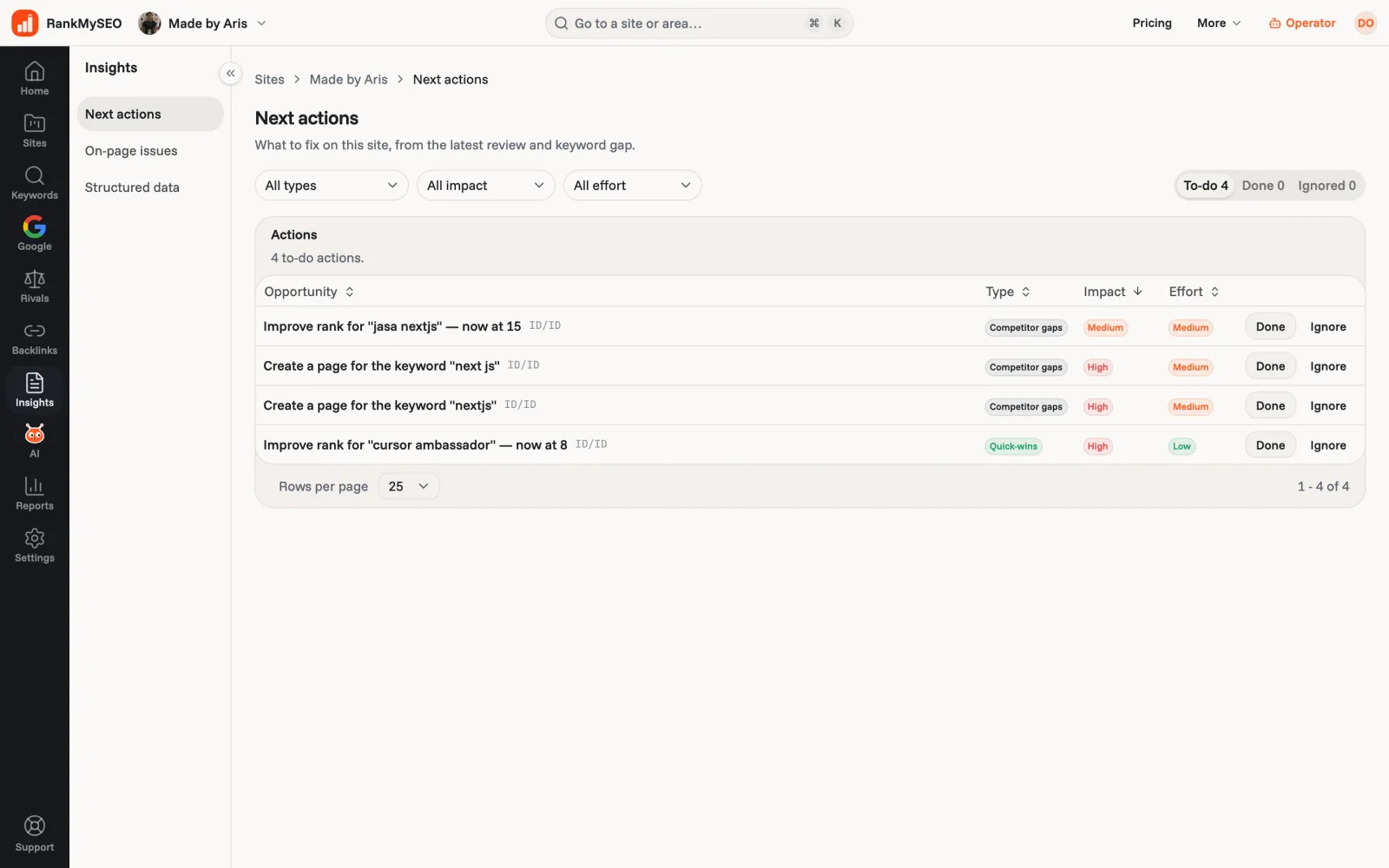
Checking fifteen things by hand on fifty pages is a day of work. The RankMySEO on-page audit reads the HTML of your site and returns a score with issues sorted by impact: empty titles, 4xx pages, thin content, temporary redirects, missing H1s, and more. Starter and above open the list of URLs behind each issue, so you know exactly which pages to fix.