
Short answer
Pick one to three sites that rank for your keywords today. List the keywords they rank for, then split them into Missing (they rank, you do not) and Losing (you both rank, they are ahead). Keep the ones with buyer intent and a difficulty you can win, and track those.
Steps
- 1Pick real rivalsChoose sites that show up for your keywords, not the biggest name in your industry.
- 2Pull the keywords they rank forExport or look up the organic keywords for each rival domain in your market.
- 3Split into Missing and LosingMissing means they rank and you do not. Losing means you both rank and they are ahead.
- 4Filter by intent and difficultyKeep keywords a buyer would type and that sites your size already rank for.
- 5Track the ones you act onWrite or improve one page per keyword, then track it so you can see whether it moved.
Who counts as a competitor
In SEO, a competitor is whoever ranks for the keywords you want. That is often a different list from the businesses you meet in sales. A local bakery may compete in search with a recipe blog and a food magazine, and neither sells bread.
To find them, search three or four of your main keywords and note the domains that keep showing up in the top 10. Skip marketplaces and giant sites you cannot match, such as Wikipedia or Amazon. Pick one to three sites that are about your size and in your market.
Missing and Losing
A gap report compares their keywords with yours and sorts the difference into two lists:
| List | Meaning | What it usually needs |
|---|---|---|
| Missing | They rank, you do not | A new page, or a section on an existing one |
| Losing | You both rank, they are ahead | A better version of the page you already have |
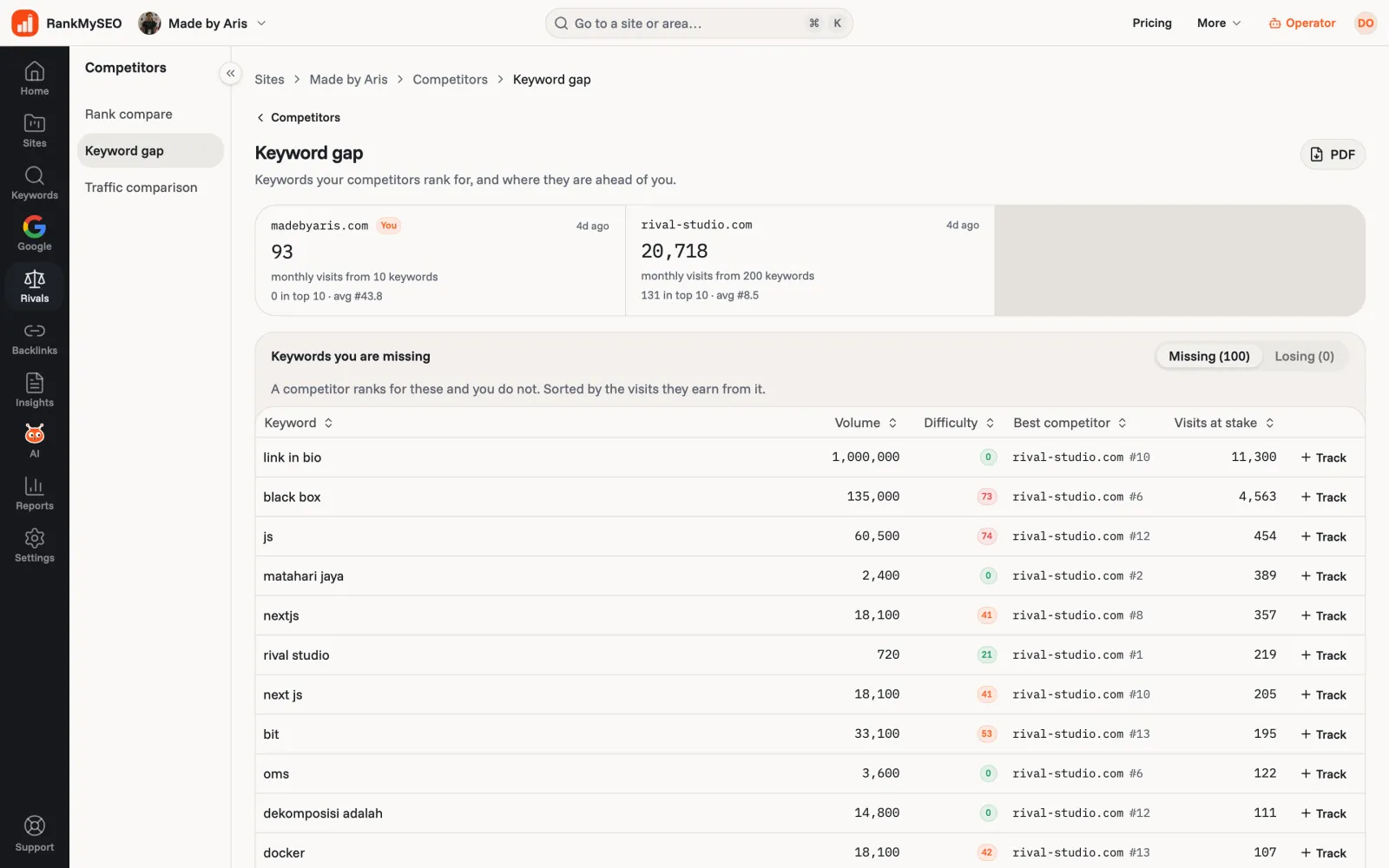
Losing keywords are often quicker wins, because you already have a page Google considers relevant. Missing keywords are where new pages come from.
How to pick the keywords worth your time
A gap report can return hundreds of rows. Most are not worth a page. Keep a keyword when:
- A buyer would type it. "Rank tracker for agencies" is closer to a purchase than "what is SEO".
- You can answer it well. If the searcher wants something you do not offer, the page will not convert even if it ranks.
- Sites your size already rank. If the top 10 is all large brands with thousands of links, look for a narrower version of the keyword.
- The volume is real. A keyword with 20 searches a month can still be worth it if every searcher is a buyer. A keyword with 20,000 that nobody buys from is not.
Then pick five or ten, not fifty. You will learn more from five pages you finish than from fifty you start.
After you publish
A new page can take weeks to settle. Add the keyword to your tracker as soon as the page goes live, so you can see when it first appears and how it moves. If a rival publishes in response, you will see that too.
In RankMySEO, save a rival on your site and open Keyword gap to see the Missing and Losing lists. Each row has a Track button that adds the keyword to your tracked list. Rank compare then shows you and your rivals side by side on every tracked keyword. Both are on Starter and above. Competitor gaps on the same project as your ranks shows how the gap sits next to your rank history.