Short answer
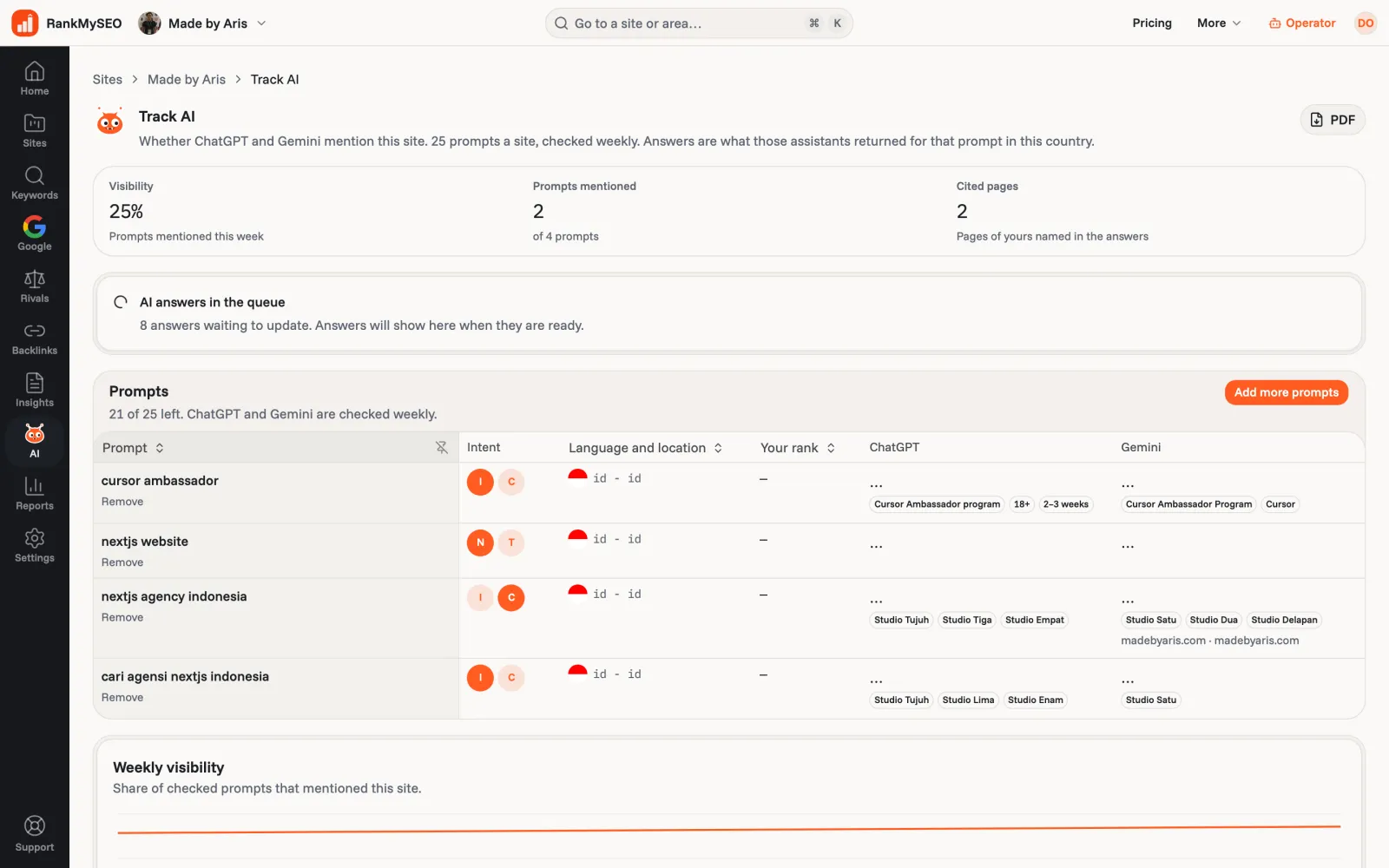
Write the questions a buyer would ask an assistant, run each one in ChatGPT and Gemini, and note whether the answer names your site, which rivals it names, and which of your pages it cites. Answers change from run to run, so repeat the same prompts each week and read the trend.
Steps
- 1Write 5 to 10 promptsUse the questions a buyer asks before choosing, in their words, such as best rank tracker for a small agency.
- 2Run each prompt in each assistantUse a fresh chat with no history so earlier answers do not steer the next one.
- 3Record three thingsWhether your site is named, which rivals are named, and which URL is cited.
- 4Repeat on a scheduleOne run is a sample. The same prompts each week show whether you are gaining or losing.
- 5Improve the pages that should be citedAnswer the question plainly on the page, with the facts an assistant can quote.
Why this is different from a ranking
A Google ranking is a position in a list. An assistant's answer is a paragraph that may name several sites, one, or none, and may cite a page as a source. There is no position 1. What you can measure is whether you are in the answer, who else is, and which of your pages the assistant used.
Answers also change from one run to the next, even for the same question. Treat one run as a sample and look for a pattern across weeks.
Writing prompts that mean something
Write the questions a buyer asks before they choose, in the words they would use. Good prompts are specific:
| Weak prompt | Better prompt |
|---|---|
| rank tracker | best rank tracker for a small agency with 10 client sites |
| SEO tool | cheap way to check Google rankings for my shop in Indonesia |
| coffee | where to buy single origin coffee beans online in Jakarta |
Include your market, your buyer's size, and the job they want done. Avoid putting your own brand in the prompt, because then the assistant will name you by default.
What to record each time
For every prompt and assistant, write down:
- Mentioned: yes or no.
- Rivals named: the other sites or brands in the answer.
- Cited URL: the page the assistant linked to, if any.
After a few weeks you will see which prompts you win, which a rival owns, and which pages the assistants trust.
What you can change
Nobody outside these companies knows exactly how answers are assembled. What tends to help:
- Pages that answer the question plainly. A short, direct answer near the top of the page, with the facts an assistant can quote: prices, limits, what is included.
- Your name on pages people already trust. Reviews, comparisons, and directories in your field.
- Consistent facts everywhere. If your pricing page, your docs, and a review site disagree, the assistant has to guess.
- Pages crawlers can read. Content that only appears after JavaScript runs, or pages blocked in robots.txt, are harder for these systems to use.
Then re-run the same prompts and see whether the answer changed.
Let a tool run the prompts
Running ten prompts in two assistants every week is forty chats a month. Track AI in RankMySEO runs the prompts you pick in ChatGPT and Gemini each week and records whether your site was named, which rivals were, and which of your pages was cited. It is on Agency (10 prompts a site) and Scale (25). See the agency page for what else those plans include.