
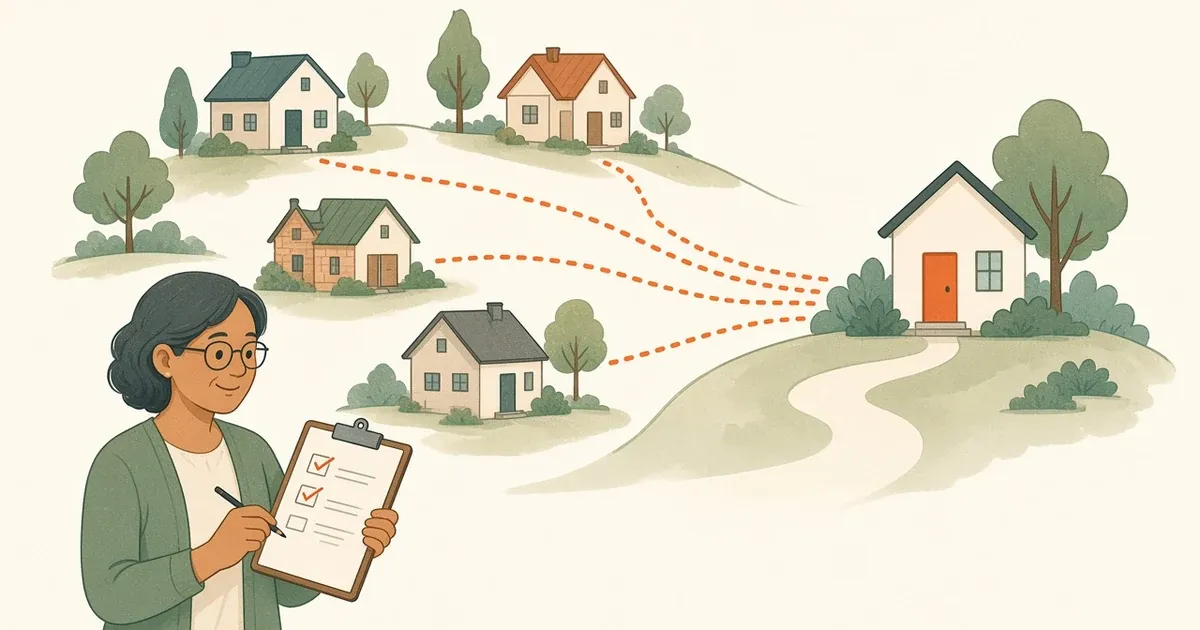
A referring domain is an external website that contains at least one hyperlink pointing to your site. If a single outside website links to your pages fifty times, it still counts as exactly one referring domain. Raw backlinks are different: they count every individual link, wherever it comes from. Because search engines evaluate the breadth of independent sites recommending your content, your referring domain count is the figure to follow over time.
What you need before inspecting referring domains
Before you review your linking sites, gather a few basic items:
- Your website domain name.
- A list of one or two direct competitors who target the same search terms.
- A tool that pulls backlink data. If you have no budget, you can test with our free backlink checker. It shows estimated backlink and referring-domain totals for a domain, with one fresh check per network every 24 hours.
- A saved record or historical window of your links so you can spot which domains disappeared and which ones appeared recently.
How a referring domain differs from a backlink
A backlink is an individual HTML link on a web page. A referring domain is the entire host or domain where that page lives.
Think of referring domains as distinct sources and backlinks as individual mentions. If an industry blog writes an article about your product and links to your homepage twice, you gain two backlinks and one referring domain. If that same blog later places a link to your site in its global footer, you might suddenly gain five hundred backlinks across five hundred pages. Your referring domain count, however, remains unchanged at one.
For example, a hypothetical online store sees its total links jump sharply while its referring domain count stays flat. If a single affiliate partner copies product descriptions onto hundreds of localized coupon pages, the store might expect rankings to climb, but positions often do not budge. All those links come from one site, so they add one referring domain, not many.
How to review your referring domains over time
Tracking this metric requires more than glancing at a single number. You need to see the movement of domains coming and going.
Watch net domain growth
A healthy website steadily picks up mentions from fresh domains as it publishes useful pages. If your backlink count rises while your domain count stays flat or falls, your link profile is becoming concentrated on fewer hosts.
Monitor new and lost domains
Links break, pages get deleted, and sites change their templates. Knowing which domains stopped linking to you gives you a chance to recover broken links or understand why coverage dropped. Reviewing these shifts across 30, 60, or 90 days shows whether recent marketing efforts earned real attention from fresh sites.
Spot competitor gaps
Examining where competitors have links that you lack helps you identify relevant directories, resource pages, and industry publications. When several rivals share links from the same three or four industry sites, those domains are standard references in your niche.
If you want a deeper primer on how links pass value, read our backlinks guide for site owners.
Common mistakes when tracking linking domains
Chasing raw backlink volume: A single spammy domain can generate thousands of scraper links overnight. Celebrating a high backlink total without checking the domain count distracts from real SEO health.
Ignoring lost domains: When an editorial site removes an article or updates a resource list, you lose a referring domain. If you only look at your total count, fresh low-quality links can mask the loss of genuine editorial partners.
Treating all domains as identical: A link from an active, relevant publication in your industry carries more weight than many links from empty web directories. Quality and context matter as much as the raw count.
Panicking over site-wide links: If a friendly partner puts your link in their sidebar, do not spend hours trying to restrict it to one page. Those repeated links still come from one referring domain.
Frequently asked questions
Can one referring domain give you multiple backlinks?
Yes. One referring domain can provide dozens or thousands of backlinks. If a news site links to three of your articles across three separate stories, you have three backlinks from that single referring domain. Search engines count each link, but they recognize that all three recommendations originate from the same editorial organization.
Why did my referring domain count drop suddenly?
Referring domains drop when external websites delete pages, take down links, change content management systems, or shut down entirely. If an entire domain expires or implements site-wide redirect rules that strip external links, backlink crawlers will register that domain as lost during their next crawl cycle.
How many referring domains does a new site need?
There is no fixed requirement for referring domains. A local service business might rank for regional terms with a small number of relevant local domains. A national software provider might compete with established sites that hold thousands of referring domains. Focus on steady monthly growth from sites in your topic area.
What is a link gap between referring domains?
A link gap occurs when one or more competitor sites have earned links from a domain that does not link to you. Finding these gaps reveals websites that already write about your industry, making them natural candidates for digital outreach.
To see your own new and lost linking sites over the past 30, 60, or 90 days, run a report on your project with check backlinks.
Keep reading